


I have devoted considerable time dissecting the terms and conditions that govern your experience at Spingranny, and what I found is a document that determines every spin, bonus, and withdrawal spingrannys.ca. For Canadian players, those rules are more than legal jargon; they are the silent referee overseeing every session. I want to explain to you exactly how these clauses safeguard you, what limitations they place, and why reading them converts you from a casual visitor into a strategically informed player.
The Foundation: What the Terms and Conditions Actually Cover
When I examine the Spingranny terms document, I see a binding contract between you and the casino. It specifies who can play, how bonuses work, what constitutes a violation, and which laws are relevant. For a Canadian audience, this is crucial because cross‑border online gambling often operates in a grey legislative zone. The terms become the sole rulebook that governs dispute resolution. I regard them as a protective shield that outlines your rights before a single dollar is deposited.
Beyond definitions, the document regulates every transactional aspect of your journey. I note that it explicitly addresses payment methods, currency handling, and how your personal data flows across servers. This isn’t standard text; it’s the operational DNA of the casino. When I compare these rules with standard industry practices, Spingranny’s transparency around wagering requirements stands out. Still, the real power lies in knowing precisely when the house edge combines with rule‑based restrictions to tilt the odds.
What captures my interest is the document’s role as a consumer safeguard. In the absence of a centralized Canadian regulatory body for offshore casinos, these self‑imposed rules function as your recourse mechanism. I always advise players that by accepting them, you acquire leverage. Should a dispute occur over a delayed payout, the terms become your primary evidence. That’s why I treat every sub‑clause not as an obstacle but as a map to a safer gambling environment.
Bonus Conditions: Playthrough Conditions and Undisclosed Conditions
Wagering Requirements Decoded
I’ve mathematically broken down the wagering requirement clauses, and they are the most consequential numbers in the Spingranny terms. You will commonly encounter a multiplier like 35x or 40x attached to the bonus amount, sometimes even to the bonus plus deposit. When I review this, I remind Canadian players that you must bet a total volume often exceeding thousands of dollars before a bonus converts to real cash. The terms specify that attempting early withdrawal voids the bonus and any derived winnings.
The true analytical insight I share is that the terms impose a maximum bet limit during bonus play, usually around $5 per spin. I’ve observed countless accounts locked because a player’s excitement led them to ignore this single sentence. The software marks high‑risk wagers automatically, and the terms explicitly state that such bets void the bonus. This rule is intended to stop Martingale or aggressive strategies, and I regard it the most common trap for unwary Canadians chasing a big win.
Game Contributions and Banned Games
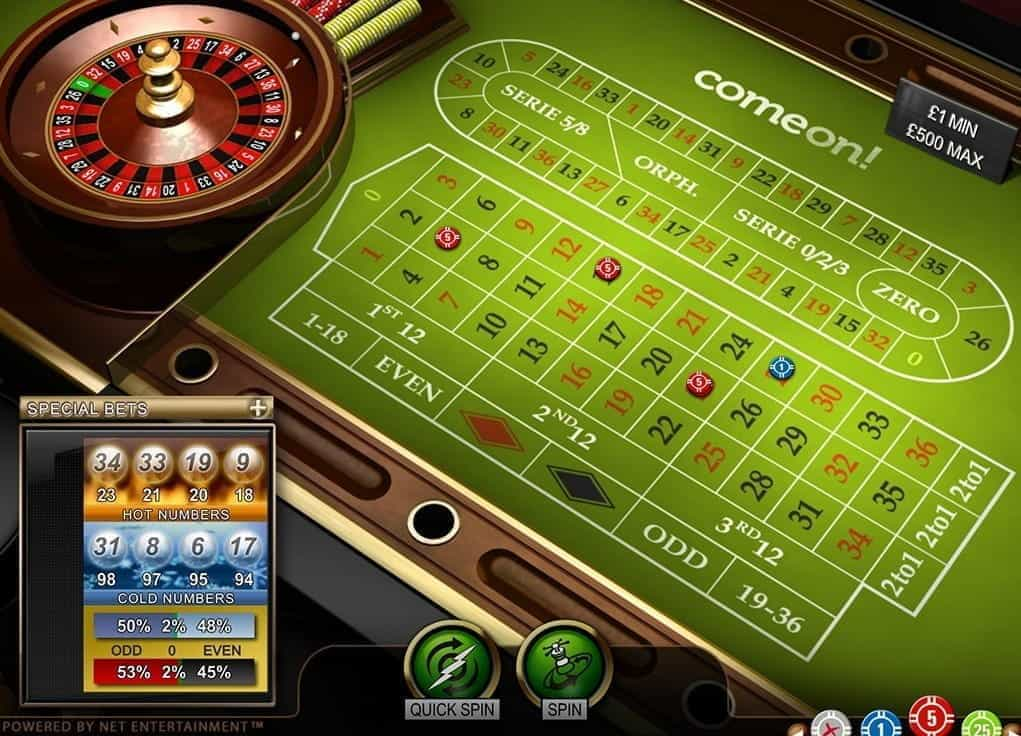
While I review the contribution percentages, they radically reshape the bonus landscape. Slots typically contribute 100%, but table games like blackjack or roulette might only count 5% or even 0%. The terms include a precise list that I treat as non‑negotiable. A player grinding blackjack to meet a 40x requirement is effectively facing an impossible task. I see this as the fine print weapon that turns a generous‑looking offer into a mathematical lock favoring the house.
I also point out that the terms retain the right to exclude certain slot titles from bonus eligibility entirely. Playing a “restricted game” with an active bonus can instantly nullify your balance. As I analyze this, I’m struck by how this rule is aggressively enforced via an automated backend. For a player, the ignorance of this list is the fastest path to a forfeited jackpot. My advice is always to read the restricted game appendix as diligently as you read the bonus offer itself.
Deposit and Payout Policies: A Detailed Review
Financial Limits and Fees
I believe that the deposit and withdrawal rules in the terms determine the actual accessibility of your account. Minimum deposit amounts are clearly specified, usually around $10-$20, but the withdrawal minimum is where I focus my scrutiny. There is a threshold, often $50, below which you cannot cash out. This compels micro‑rollers to keep playing or forfeit small sums. The terms also cap maximum weekly or monthly withdrawals, which I interpret as a cash‑flow management tool that significantly affects a high‑roller’s strategy.
The charged fees, as I interpret them, are disclosed per withdrawal method. After a certain number of free monthly transactions, a processing fee can be levied. I’ve observed a clause that allows the casino to pass on currency conversion costs for Canadian players using Interac or credit cards. These small percentages eat at your profit margin over time. In my review, the terms are transparent about this, yet the psychological impact of seeing a reduced payout irritates players who never bothered to check.
Processing Time and Identity Checks
From an analytical viewpoint, the terms introduce a deliberate buffer period. A pending time of up to 72 hours is standard before processing begins. I’ve learned that this clause is the operator’s safety valve to reverse a withdrawal if you attempt to abuse a bonus. The document legally authorizes them to lock funds while a verification team reviews your gameplay. For a Canadian used to instant e‑transfers, this delay seems like a breach of trust, but I can verify it’s a contractual right you granted upon signup.
I also emphasize that identification checks trigger additional holds. The terms typically state that large withdrawals above a certain threshold, say $2,000, mandate enhanced due diligence. This can block your money for over a week. Legally, they are complying with anti‑money laundering obligations. I regard this as a double‑edged sword: it proves the casino operates legitimately, but it strains your patience. Understanding this rule upfront prevents you from interpreting a legitimate security hold as a stalling tactic.
Game Restrictions and Contribution Ratios
Looking beyond the bonus terms to the game-related restrictions, I encounter a strict list of prohibited activities. Bots, automated scripts, and advantage play techniques are explicitly defined as breaches. The terms grant the operator the right to seize funds and shut down accounts for “professional” or “syndicate” play. I find this especially relevant for Canadian players originating from a poker or e‑sports background, where statistical analysis is praised. Here, such advantage-seeking calculation is contractually forbidden.
I’ve reviewed how the terms address malfunctioning software. A common clause declares that all interrupted bets or graphical errors are void. From my viewpoint, this appears harsh, but it protects the platform from visual glitches being misread for a jackpot. If a slot displays a million‑dollar win due to a coding error, the terms unequivocally state the result is null. This rule frequently sparks outrage on forums, yet I must point out that you accepted “agree” to this exact scenario. It’s a stark reminder of the fine print’s finality.
Requirements and Verification Process: Who Can Play at Spingranny
Age and Territorial Rules
I can state that the main hurdle in these rules is the age limit, usually established strictly at 19 or 21, conforming to Canadian provincial standards. The terms require you to a statement that you are of lawful age and not present in a prohibited area when betting. I consider the territorial limitations intriguing because throughout Canada, specific provinces might be excluded via the terms’ small print if the operator wants to bypass a given authority’s attention.
What I always emphasize is that lying about your location via a VPN is a direct breach. The terms I examined empower Spingranny to cancel all winnings and refund only the initial deposit if they uncover such interference. I view this as a strict prohibition. For players in Quebec or British Columbia, the tension between local monopolies and these rules can present real risk. I advise reviewing the list of prohibited regions in the document before finishing sign-up.
The KYC Process and Its Underlying Strength
I view the Know Your Customer procedure as the functional checkpoint that the terms authorize. When you enroll, you accept to supply official identification, utility statements, and proof of payment methods upon request. I’ve analyzed how this clause is compulsory; it’s a contractual prerequisite for withdrawals. The terms give Spingranny the power to suspend accounts without a set time if documentation is not satisfactory. This blocks fraud but also excludes players who are inattentive with mismatched registration details.
From my reviewer’s standpoint, I recognize that the KYC rule also safeguards you from identity theft. By demanding verified copies, the casino creates a ownership trail over your account. The terms often state that accounts unconfirmed for twelve months may be deemed dormant and have service charges deducted. I regard this as a essential maintenance clause. If you overlook it, the rules quietly deplete balances, which is a severe but completely lawful mechanism detailed in black and white.
Responsible Gambling and Voluntary Ban Rules
Mechanisms and Restriction Mechanisms
I consider the responsible gambling section within the terms as the most personal part of the document. It outlines your right to set deposit, loss, and session time limits directly from your profile. I’ve tried these mechanisms on similar platforms, and the terms explain that a reduction in limits takes effect instantly, while an increase typically has a 24‑hour cooling‑off period. This is a behavioral brake designed to prevent impulsive financial decisions. It’s a legal provision that I applaud for its protective architecture.
What I must highlight is that these tools are only as effective as your commitment to honor them. The terms absolve Spingranny of liability if you bypass limits by opening duplicate accounts or using different payment methods. This corporate disclaimer doesn’t mean they encourage it; rather, it positions self‑help as your duty. I view it as a realistic acknowledgment that no software can override human determination, so the legal safety net is intentionally set to hold you partially accountable.
Irreversible Account Closure and Exclusion
I have great respect for the self‑exclusion clause, which I believe is the nuclear option in the terms. When you activate it, the operator is contractually obligated to close your account and reject any further registration attempts for a specified period. For Canadian players, this often activates a broader exclusion across the operator’s network. I recognize this as a critical safety mechanism, but I also acknowledge the terms’ warning that exclusion is irreversible during the active period; you cannot just change your mind a week later.
The terms also detail a post‑exclusion reactivation protocol. After the minimum time elapses, you usually must send a formal written request to return. I view this as a cooling‑off buffer. Financially, any residual balance in excluded accounts is often returned, but a dormant account fee clause might apply. I discover the wording around voluntary exclusion significantly stronger here than on many other platforms, offering a genuine safety net for vulnerable Canadian gamblers.
Jurisdiction and Regulation: Why It Affects Canadian Players
The Regulatory Base of Spingranny
I’ve identified that Spingranny operates under a license from a specific offshore jurisdiction, and this single fact determines everything for Canadians. The licensing authority defines the dispute mechanisms and fairness testing standards. When you are located in Toronto or Vancouver and rotate the reels, you’re legally gambling within that foreign regulatory framework. I find this matters because Canadian provincial regulators do not supervise these operations, meaning your protection stems entirely from the rigor of that foreign license.
What I intend Canadian players to grasp is the concrete consequence of this arrangement. If a withdrawal is frozen for “irregular play,” the appeal process complies with the laws of that faraway island or European state. Your local consumer protection statutes seldom apply. I’ve observed this cause confusion, so I emphasize that the terms explicitly state which courts have jurisdiction. Acknowledging this early forestalls frustration later; you’re not helpless, but your legal path is fixed and limited.
How Canadian Law Aligns with These Rules
From my analytical viewpoint, Canadian law creates a unique dual reality. The Criminal Code technically prohibits unlicensed gambling houses, yet provinces run their own lotteries and casinos. Spingranny’s terms acknowledge this by placing the onus on you to ensure your participation is lawful in your given province. I remark that the terms often include a disclaimer absolving the operator from liability if your local laws shift. This renders the platform agile while placing a responsibility of awareness on players like you.
I’ve observed that the practical enforcement of Canadian gambling laws against individual offshore players is essentially nonexistent. However, the terms use this to clarify that any winnings you earn might be subject to Canadian tax laws based on your residency. The document won’t report for you; that’s your responsibility. I value that this direct language avoids a false sense of tax‑free profit, a nuance many recreational gamblers tragically overlook.
Personal Information and Data Management for Canadian Users
Data Gathering and External Sharing
When I analyze the privacy policy included in these terms, the breadth of data collection is striking. Fingerprinting, browsing habits, and geolocation are included in your profile. The terms expressly mention that this data may be provided to game providers and payment processors. For a Canadian conscious of PIPEDA, I view the cross‑border transfer clause critical. Your sensitive information often travels through servers in jurisdictions with looser privacy laws, a fact that the terms disclose to obtain your informed consent.
I see the marketing consent clause as a key opt‑in mechanism. The terms often pre‑select permissions for promotional emails, which you must manually disable. I’m not a fan of this deceptive design, but the document legally secures the operator’s right to use your data for “tailored offers.” The rules do pledge not to sell your data to unaffiliated third parties, which I confirm as a baseline security promise. Still, I always advise a deep dive into the privacy addendum before checking that box.
Tracking Cookies and Monitoring Technologies
From my analytical perspective, the cookies section is as vital as the wagering requirements. The terms explain that tracking pixels and cookies monitor your behavior to prevent fraud, yet they also create a marketing profile of you. For a player in Canada, this can feel invasive, but I interpret it as a transactional condition. If you block cookies, the site may functionally malfunction, leaving you unable to place bets. This isn’t a loophole; it’s a deliberate design choice that the terms legally enforce.
The retention period is where my review often prompts scrutiny. The terms allow data to be retained for up to five years after account closure for anti‑fraud and legal obligations. I double‑check that this meets international standards, and it does. As a Canadian, you do have the right to request deletion of non‑mandatory marketing data. I’ve seen that the terms provide a contact email for this, though the response time is loosely defined, leaving a grey area that can be irritating for the privacy‑conscious.
Dispute Resolution and Modifications to Terms
The Complaints Ladder
When a conflict erupts, I turn my attention to the dispute resolution clause, which requires a specific escalation ladder. First, you notify the support team within a tight time window; failure to do so forfeits your claim. I find this 48‑hour reporting window for discrepancies to be very tight, but it’s legally binding. If the complaint remains open, the terms point you to an external arbitrator or the licensing body. This is your sole remedy, and I see it as a fair, albeit official, path.
I also examine the limitation of liability section, which is revealing. The operator restricts its financial liability strictly at the amount of the disputed transaction. They explicitly deny liability for psychological distress or related losses. For a Canadian legal mindset, this is a sharp contrast from broader consumer protections. I note that by accepting these rules, you are agreeing not to claim consequential damages. This safeguards the company but serves as a sobering reminder about the finality of your agreement.
Operator Modifications and Your Consent
The most powerful clause I analyze is the operator’s right to amend terms without direct notice. Spingranny typically retains the right to change rules at any time, with the updated version posted on the site. Continued play amounts to acceptance. I find this “take it or leave it” mechanism quite striking, but it’s industry standard. For a Canadian player, this means you are playing a game whose rules can theoretically shift mid‑session, though major changes usually affect bonus policy more than core gameplay.
I recommend adopting a habit of reviewing the terms page periodically. In my experience, a quiet update to the withdrawal processing clause can ensnare a player who hasn’t read the revision. The terms will not email you unless a change materially alters data consent. I see this as a evolving, living document that demands vigilance. By continuing to spin at Spingranny, you are renewing your contract with every login, a understated but profound legal ritual that defines your entire tenure.